Sunday, January 26, 2014

Science Sunday: Evolutionary Psychology: The Emperor's New Paradigm


ResearchBlogging.orgI've always been suspicious about Evolutionary Psychology, and David Buller is (or was nine years ago) as well. Let me be clear, I don't doubt evolution; I doubt in the methods and results ascribed to evolutionary psychology. So in short this paper is preaching to the choir. Prepare for some rah-rah in this post.

Tangent: I think the title of this article is needlessly inflammatory, just as much as "Voodoo Correlations in Social Neuroscience." It comes as no surprise to me that when scientists engage in tearing down other scientists research, we do so with no lack of venom. Criticizing (destructive or otherwise) the science of others is half of what science is (the other 90% is statistical errors), in my experience scientists have a thick skin about it.
"Evolutionary psychology is an approach to psychology, in which knowledge and principles from evolutionary biology are put to use in research on the structure of the human mind. It is not an area of study, like vision, reasoning, or social behavior. It is a way of thinking about psychology that can be applied to any topic within it (Cosmides & Tooby 1997)."
This definition sets up the paradigm of evolutionary psychology (EP) with the goal to analyze human behavior as an adaptation that would have helped our ancient hunter-gatherer kin survive or reproduce. This seems logical enough, but how could this be science? In review of The Method, we see that logical observation is only half of the equation, and that relevant and testable explanations are also required (Copi 1982). In this paper Buller examines three 'discoveries' of EP and suggests that they are not sufficiently supported by evidence.

The Cheater-Detection Module


If altruism is an evolved adaptive behavior (a vampire bat regurgitates excess blood for others to eat so that when times are lean others will reciprocate the behavior), then cheating would also be adaptive (vampire bats that do not regurgitate blood), and thus cheater-detection would be required for altruism to remain an adaptive behavior (vampire bats that don't regurgitate for fat bats hording all the blood). Need an explanation of vampire bats sharing blood? EP would then like to apply such a logical progression to human altruism and the evolution of a cheater-detection module, and that this module would focus on social interactions.

EP researchers claim to have evidence of this predisposition to thinking about social interactions by manipulating the content of situations (social and otherwise) presented as part of the Wason selection task. The original Wason selection task involves logical deductions about the relationships between the color of a card and the number printed on the other side; the EP modification changed this to social relationships between the age of a person and the presence of alcohol. Unfortunately, as Buller illustrates, the manipulations used were flawed at least linguistically if not also logically; by making the situation a social interaction researchers also changed the logical type of the situation from indicative (if statements) to deontic (must statements). I'm not entirely sure if I've use the correct grammar vocabulary, but the important thing is that subjects may have interpreted the social situation as what "must" be instead of as an "if-then".

Sex Differences in Jealousy

The theory from EP is that men are more concerned with sexual infidelity since his offspring would have to compete with another male's offsprings for maternal care. Likewise, women are more concerned with emotional infidelity since her mate might withdraw paternal care from her and her offspring. Thus men respond to sexual cues of infidelity while women respond to emotional cues. EP researcher David Buss gathered survey data from a questionnaire on infidelity to support this theory. And while it did show that men care more about sexual infidelity than women, it did not show that men cared more about sexual infidelity than emotional infidelity. Additionally female sexual infidelity is more (compared to males) indicative of general relationship dissatisfaction and is more likely to result in abandonment. So the perceived threat of the infidelity may be the cause of the sex-difference, rather than an adaptive behavior related to competition of offspring.

Discriminative Parental Solicitude

EP suggests that substitute parents are more likely to engage in dangerous parenting than genetic parents. I'll restate that: Step-parents are more likely to abuse their kids than biological parents. Estimating conservatively step-children are 8 times more likely to be physically abused. But the problem is that the data are confounded. Invariably these data come from official state records, and unfortunately state records only note about half of the fatal maltreatment of children officially. Maybe as few as 1 in 10 child abuse cases are confirmed by the state. Also, state child-protection workers often use the presence of a step-parent as a diagnostic indicator of abuse; step-parents are more likely to be recorded as abusers by the state simply because they are step-parents. So it may be there step-parents don't abuse kids anymore than biological parents; the state just catches more step-parents. Results: inconclusive. In the interest of full-disclosure: I'm a step-father.

I'll close here with a direct quote from this paper:
"Thus, although the Evolutionary Psychology paradigm is a bold and innovative explanatory framework, I believe it has failed to provide an accurate understanding of human psychology from an evolutionary perspective."
Buller, D. (2005). Evolutionary psychology: the emperor's new paradigm Trends in Cognitive Sciences, 9 (6), 277-283 DOI: 10.1016/j.tics.2005.04.003

Sunday, April 28, 2013

Science Sunday: Gut Reaction

ResearchBlogging.orgI recently read a 2006 paper titled "Visceral Influences on Risk-Taking Behavior." In spite of it's problems this paper uses some great language. Take for example this opening paragraph from the introduction:
"People often do things that they almost immediately regret. Would-be dieters succumb to the lure of forsworn foods, only to curse their weak wills once their hunger (or the food) is gone. Unfaithful spouses live wracked with guilt after an impulsive sexual dalliance, only to repeat the cycle again and again, each time as bewildered as the last by the inconsistency between the strength of their resolve in the company of their families and the crumbling of this resolve in the presence of a willing lover." (Ditto, et al., 2006)
Forsworn. Dalliance. These aren't words that get bandied about normally. The paper also sports a comprehensive literature review of "failures of will" dating back to the 4th century BCE and the Aristotelian akrasia, where a person knowingly does something wrong. Economists have also been baffled about our ability to act against our own self-interest, and folks like Larry Winget make a career telling us about it. But why do people behave this way?

The authors of this paper attribute it to Visceral Factors. According to Loewenstein (1996) Visceral Factors are motivational states such as hunger, thirst, pain, and sexual desire. In this paper the authors looked at hunger and sexual desire and how exposure to them led participants to make irrational or impulsive decisions. (Surprised yet?)

Chocolate chiopcookie
In the first experiment participants wagered spending more time in the lab doing experiments  vs. chocolate chip cookies. One group had the cookies described to them, but the other got to see and smell the cookies. The smellers were the fellers ones more likely to wager time, even when told they didn't have good odds. The idea being that the visceral hunger response led to the impulsive, riskier decision. Side note: Imagine how awesome it would be to be the researcher; tempting hapless volunteers with delicious cookies but forcing them to wager time just in the hopes of getting a taste.

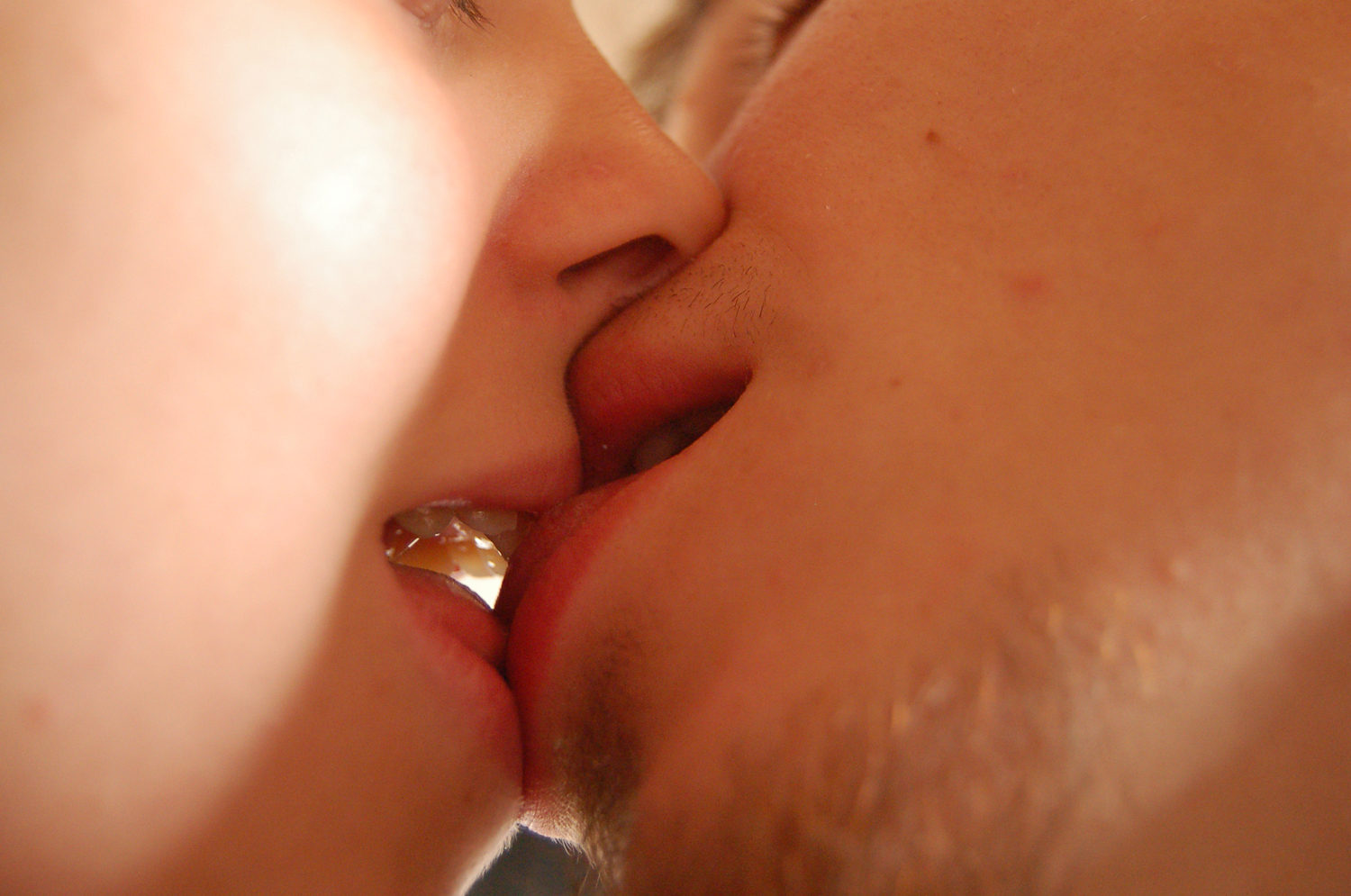
French Kiss
The second experiment involved a vignette where a young couple begins to make out and prepare to have sex, and then realize they have no condom. In the visceral condition this was presented as a video, in the non-visceral condition this was presented in a passage that participants would read. Then participants were asked to respond as if they were in that situation how likely they would be to have sex even without a condom. Again the idea is that the stronger visceral response to viewing the soft-core video was the reason that group was more likely to choose to engage in risky sexual behavior.

All of this is great, and as I said I thought the paper has great use of language in science writing. But I'm not so sure that it is just viscera, and not just stronger stimuli. In general Bigger Stimuli = Bigger Response. The response here being desire for the stimuli. What I'm saying is, you want the cookies you smell more because the smell is more stimulating in general, not just because it made your tummy rumble. So in order to control for the impact of the stimuli, you would have to find a way to use the same stimuli but have it effect the viscera of only some participants. I think you could do this with a group of quadriplegic participants, right? I mean they have viscera but they can't sense them. Or maybe easier you could have a hungry and full groups when presented with cookies, but that I think would still be looking at motivation, not viscera exclusively. But hey, I don't have to have the solution, just identify the problem.

Ditto, P., Pizarro, D., Epstein, E., Jacobson, J., & MacDonald, T. (2006). Visceral influences on risk-taking behavior Journal of Behavioral Decision Making, 19 (2), 99-113 DOI: 10.1002/bdm.520

Sunday, April 21, 2013

Science Sunday: The ontogeny of behaviour in the albino rat

ResearchBlogging.org Every Sunday, I'd like to post a review of an interesting peer-reviewed science article. To kick things off I'm picking an old favorite, originally posted in 1964! It is certainly well cited, Google Scholar lists the citation count at 452! Indeed this paper was a "Citation Classic" in Current Contents in 1981. At the time the lead author  Robert Bolles, was still living and stated:
"I have always believed in the idea that experimenters should look at their animals...the human eyeball is the instrument of choice if you want to observe a new phenomenon, and particularly if you want to gain a new understanding of it."
Sprague-Dawley Rat
If you have ever wondered why science uses rats the answer is that we know everything there is to know about rats. We know how they age, how they metabolize ... anything, how the respond to stress, how they develop over time, even how they laugh when tickled. Well, our understanding of rat behavior begins in antiquity but is greatly expanded by this 1964 article originally published in the journal Animal Behaviour.

In fact this article describes qualitatively the behaviors of infant rats from birth to about 24 days (rats are weened at day 21). In the first experiment, Bolles and Woods observed 13 litters with an average of 9 pups (117 pups) in their "natural" laboratory environment (cages). The animals were of the Sprague-Dawley line, which is still used today. They did use several different methods of observation and schedules of observation to arrive at a comprehensive guide to the ontogeny of lab rats.

They begin with postural observations, describing three postures that develop over time: lying, sitting and standing. Lying being the default resting position of the rat, often using other bodies for support. Sitting began on day 4 when subjects first began to lift their heads, and was fully developed by day 17 when subjects could sit and perform activities such as grooming. Also beginning on day 4 are the first attempts to support weight on the legs, and by day 10 the animals can support themselves. By day 13 they can run, by day 15 they can stand on three legs and scratch with the fourth. They can rear up on two legs with support for the front legs on day 16 and can rear independent of support (for the purpose of play-fighting with siblings) by day 18.

In similiar fashion reflexes are described. Without relating the specific timeline the reflexes are: twitiching, head waving, stretching and yawning, body flexion, righting reaction, freezing, sniffing, auditory orientation, and visual orientation. When describing startle response int he auditory orientation section there is a great footnote on the word "click:"
*The sound used was relatively well-controlled and constant, but, unfortunately rather poorly defined; it was the sound of a Parker T-Ball Jotter pen being retracted at a distance of approximately 1 foot.
Psychologists are hilarious. Also found it interesting that the animals did not freeze in fear until day 26 and they froze for approximately 15 seconds. I've never seen any rats hold still for that long unless they were sleeping. Following this functional activities are described. Here is the list: sleeping, consumatory behavior, locomotor activity, climbing, grooming, exploration  manipulation, digging, and defecation  Here the theme of development was similar as above, with rudimentary non-functional behaviors appearing first (such as scratching motion without making contact with the skin), that later developed into full-fledged adult-like behavior.

Ultimately we get a description of the social behaviors in the observed rats. Social behavior in young rats is evidenced by chasing and fighting. Bolles, and Woods observed rats begin this social play-fighting on day 14 when their eyes began to open.The activity peaks between day 20 and 30 when the whole litter engages in a high level of activity.

Table 1
In a second experiment Bolles and Woods attempt to quantify the behaviors they observed in the first experiment. Using experimental methods the authors observed 12 rats (2 each from 6 litters) and summarized their behaviors as percentages. To the right is table 1 from the paper. There are many more graphs showing the time course of the development of behaviors and it really is a fascinating reference, but I won't reproduce all of that here.

The first point of discussion and perhaps the most salient is that from these findings we can view rats as a far more social animal than might otherwise be considered. Early social interactions are to wrangle for nursing or comfort, and later become play fighting and chasing. As the authors noted this social behavior likely leads to long lasting changes in the adult organism and "offers interesting possibilities for research in this area." (See the next 50 years of rat studies for more on these possibilities)

Bolles, R., & Woods, P. (1964). The ontogeny of behaviour in the albino rat Animal Behaviour, 12 (4), 427-441 DOI: 10.1016/0003-3472(64)90062-4

Monday, April 8, 2013

A Classy Post

Welcome dear reader to a post of self-promotion. I am teaching TWO special topics classes coming up and I want you to take them. So here I will give you a brief sketch of what each class is going to be about and hopefully you want to register for one or both of them.

PDF Version
First, this summer I'm teaching Psychology on Film. This will be the third summer that I've taught this course. The theory of this class works thusly:

  1. Art imitates life
  2. Artists (film makers in this case) are attempting to capture moments of the human experience
  3. Psychology is an integral part of the human experience
  4. Artists, perhaps inadvertently, capture psychology in their art (in this case film).
  5. As fledgling psychologists we can examine, discuss, and evaluate this process in order to gain not only a better understanding of the film, but also a better understanding of the underlying psychological phenomenon.
In summer class we meet for three hours twice a week, so that means in each class we will watch a film, and then discuss. I try to pair the films each week so that both are about a related topic. Each week you will write a short essay that explores the psych phenomenon in each or both films. Generally during the discussion I give you a solid sample outline of a perfectly acceptable paper. So if you like talking about movies, or psychology, then this might be a good class for you.

PDF Version
The second class, coming this fall, Drugs and Behavior. This is the first semester I've been able to offer this class and I think you'll enjoy taking it. This is an introductory psychopharmacology class where we will talk about various chemical agents and how they interact with the brain and change behavior. This is not a class about addiction, treating addiction, drug policy, or the criminality of certain drugs. We will however be studying both therapeutic and recreational drugs including: alcohol, amphetamines, caffeine, cocaine, hallucinogens, marijuana, nicotine, opiates, psycho-therapeutic medications, stimulants, and probably some other drugs. So I imagine this class is valuable for students majoring in criminal justice, human services, nursing, or psychology. Although anyone with an interest in the effects of drugs on behavior would be welcome.

Third, is an old class delivered in a new way. This summer. I'm offering Intro to Psych as a Hybrid class. The purpose of a hybrid class is to blend on-line and face-to-face class elements. On-line you'll be doing all the content work, reading material, watching videos lectures, etc. In class we will work specifically on applying that content in activities, projects, and such. So this results in meeting once a week instead of twice a week. For example, you might read in your textbook about the principles of operant conditioning, watch a video on-line about pet training, then class will meet at Rabbit Run Park and we can teach your dog a trick. If you are someone you know needs to take Psych-101 then I think this would be a fun and interesting way to do it.

So I hope you register for my classes, I'll look forward to seeing you. And if you've take my summer film class in the past, feel free to write a testimonial in the comments! 

Thursday, March 14, 2013

How I Learned to Stop Worrying and Love Cell Phones

Cat on the Phone
In the past I wrote about some big problems I have with cell phones:

  1. Students are rude with their cell phones
  2. Cell-phone bans cause students significant anxiety.

Science is the best way to understand the universe and solve our problems; I wanted to tackle this problem scientifically. So I applied The Method.

First step: ask an answerable question. This is a bit harder than it might at first seem, since whatever question I ask will need some definitions so that it can be answered. Simply asking, "What is best?" is not sufficient unless we all agree on what "best" is. So here is what I came up with:
How much cell-phone use in class results in the greatest academic achievement, course engagement, and student satisfaction?
That question has three measurable outcomes, as long as I define how I will measure those results. So for the purposes of this experiment I used the following operational definitions:

  • Academic achievement was measured by overall course grade (points out of 1000).
  • Course engagement was measured by counting good-questions asked per class.
  • Student Satisfaction was measured by an end-of-course evaluation by students.

The next step is to do background research so I read a multitude of articles about cell-phones and attention, cell-phones and learning, anxiety and learning, cell-phones and anxiety, and many other permutations of the key-words: cell-phone, learning, anxiety, engagement, classroom, and teaching. After weeks of literature review I thought I was ready to design my study.

Since I was teaching three sections of Introduction to Psychology on the same day that semester. I planned a different cell-phone policy for each class and put the relevant information in the syllabus.

VERBOTEN!
1. Verboten: "There will be NO cell-phone use during class. Phones must be off or on silent, remember that vibrations are sounds, turn your phone off.. If I see your phone out I will take it and put it on my desk for the duration of class. If you are expecting an emergency call inform the caller ahead of time to wait and call after class time, or do not come to class until your anxiety about your potential emergency has been resolved. After your third offense I will begin to penalize your course grade. " (Note: Thankfully no students called my bluff on the harshness of this policy.)

2. Permissive: There was no statement about cell-phones in the syllabus and I ignored completely any use or ringing of cell-phones.

3. Interval: "The class will be organized into roughly 20-minute blocks of activity (20 minutes of lecture, 20 minutes of video, 20 minutes of group work, 20 minutes of an in-class activity, etc.). During these times you may not use your cell-phone, not even for texting. However, between blocks there will be 2-5 minutes of transition time during which you are free to check your messages, send a tweet, update your status, or whatever it is you do on your phones. I will make clear announcements about when it is cell-time and when it is class-time before and after these transitions."

I generated a lot of usable data from this semester and went about analyzing the results. As far as academic achievement was concerned there was no significant difference between all three courses. The Interval section had significantly greater course engagement and student satisfaction (even out scoring the cell-phone permissive section). So to interpret and speculate a bit, I think this shows that good students are still good students regardless of cell-phone policy (they probably weren't using their phones even when allowed) and bad students are still bad students even if they aren't texting. But, students engage with the course more when they are not anxious about their missed messages while remaining free from texts for large blocks of class time. I also speculate that student satisfaction is directly influenced by higher classroom engagement.

The last step will be to share my results, which I suppose I am doing here, but I'm also preparing a manuscript to share with the larger scholarship of teaching and learning community. In the mean time I have adopted the interval policy in all of my courses since. Thank you Science!


Wednesday, March 6, 2013

A Little Bit of Unpredictable Stress Everyday

ResearchBlogging.orgThat is the recipe for depression. Chronic Mild Stress (CMS). Or at least it is the recipe I used to depress rats. As I mentioned earlier I worked with rats to research the mood-effects of Salvia. One important piece of this research was the idea that a depressed brain is different than a healthy brain and may respond differently to drug exposure. So in order to apply that in rats, I needed a way to create depressed rats. For me, that meant using CMS.

In the CMS model, developed first by Richard Katz, rats exposed to mild stressors everyday showed a decrease in sucrose consumption that was later reversed by administration of an anti-depressant (Katz, 82). Let me explain.

Chronic (happening regularly over time) Mild (not severely traumatic) Stress (a feeling of strain to adapt to changing environmental (or psychological) conditions). Practically this means doing things to rats to make them a little bit uncomfortable everyday. In my research, inspired by work that came out of Paul Willner's lab, this involved the following: overnight strobe-light (2Hz),  cage tilting at 45 degrees, forced paired housing (a strange rat was put in the subject rats cage separated by a wire mesh), continuous illumination (there is no night), overnight food deprivation, overnight water deprivation, and empty water bottle exposure. These were all done briefly enough not to cause excessive stress, remember I was going for uncomfortable not traumatic.

A Long-Evans Lab Rat
There is a hallmark feature of human depression called anhedonia. Anhedonia is the inability to experience pleasure from pleasurable stimuli. Or joylessness. Anhedonia is the reason that depressed people don't laugh at jokes, or smile when a baby giggles, or enjoy doing any of the things they used to enjoy doing. Pleasure doesn't feel good anymore. If you or someone you know has ever been depressed it is likely you witnessed anhedonia.

Happy rats love to drink sugar water. Even when dissolving a very small amount of sugar in water (less than 1% sucrose solution), rats show a strong preference for sweet-water over regular water. We can measure that by giving the rats two water bottles, one with plain drinking water and one with sweet-water. Come back 24-hours later and measure how much of each the rat drank. Happy rats drink around 90% sweet-water. We might say that sweet-water has a greater hedonic value; it is more pleasurable for the rat.

After three weeks of CMS my rats exhibited anhedonia. After three weeks of exposure to the mild stressors listed about the rats no longer show a preference for sweet-water. Again we present the rats with two water bottles, one with plain drinking water and one with sweet-water. 24-hours later we see that they drank about 50% sweet-water. This shows no preference for the sweet-water. Even though the sweet-water might taste better (have a higher hedonic value), the rats don't care. Because they are joyless. They have developed anhedonia. They are depressed (or at least they are now a robust animal model of human depression).

Katz, R. (1982). Animal model of depression: Pharmacological sensitivity of a hedonic deficit Pharmacology Biochemistry and Behavior, 16 (6), 965-968 DOI: 10.1016/0091-3057(82)90053-3
Willner, P. (2005). Chronic Mild Stress (CMS) Revisited: Consistency and Behavioural-Neurobiological Concordance in the Effects of CMS Neuropsychobiology, 52 (2), 90-110 DOI: 10.1159/000087097

Monday, February 11, 2013

Servire Est Vivere

As a member of the faculty here at SCC I am encouraged to engage in campus service. Which means I should do things on campus. Fortunately, I would do things even without encouragement, but it is still nice to know that the college is interested in fostering this kind of internal community. So... what does campus service look like?

One of the first things I did on campus was volunteer to speak at the annual Scary Movie Marathon. Around Halloween I saw a flier advertising the scary movies that were going to be shown and I thought that would be a great opportunity for me to bring some academic psychology to what otherwise would be a purely entertaining movie. That first year I spoke about the nature of fear, and about a different topic from psychology (Aliens, Zombies, and Bloody Mary) each year since.

Last spring I helped to organize a week of child abuse prevention events during child abuse awareness month. This included speakers from the community like Dr. Jamie Spurrier-Kondis a pediatrician specializing in child abuse, and also a nationally recognized advocate Erin Merryn who went on to be named Glamour magazine's woman of the year. I also got to speak at an anti-bullying event when speaker cancelled at the last minute.

Aside from talking, I serve on tasks force (is that right?) and committees. That really means I go to meetings and try not to doodle too much. Like with most meetings some are effective and others not. Either way I always try to bring some entertaining ideas to the table.Presently I serve on the Long-Range Planning Steering Committee (LRC-SC) and the Distance Learning and Educational Technology (DLET) Task Force.  Both are trying to create systems and plans where, in many cases, there was no system before. It is very challenging since so many interests are vested in both of these arenas. I suspect that there will be no way to please everyone in either of these groups, but hopefully we can find a healthy consensus for our plans.


I've also been helping with the promotion of The American Theater Festival. This is the most fun I think you are allowed to have doing campus service. The English and History departments work together each year to stage plays (RFK and Gertrude Stein) that are connected to American History. There are so many events aside from just the plays that are going to make this spring a fun time to be at SCC. If you are looking for more information you can check out the ATF Facebook page. This year, in an effort to increase attendance to the plays we are trying to do more promotion on social media. Like this blog, the ATF has a blog, but the best part about it is that this year we found a very special guest blogger to write for us: Gertrude Stein herself! So go ahead over to her latest blog post and check it out!

Wednesday, January 23, 2013

What I Did Over Winter Vacation

Topiary Mickey

Over the break my family and I went to Disney World for our vacation. Even though I live within sight of the airport (really), getting to Lambert has been a problem for us in the past. Taking a cab both ways is pricey for such a short trip, and there is no good way to walk to the airport. But at the last minute we arranged with a friend (who also was dog/ferret/fish/house sitting for us) to ferry us to the terminal. you might think that flying with a baby (my son Rex is 8 months old) would be a challenge, but not with this baby. He is so laid back, he just slept and/or  smiled the whole trip.
In Orlando Disney has all the machinery in place to get you (and your luggage) from the airport to your hotel. They even collected our bags for us, so all we had to do was get in-line for a bus. Finally my kids started to get excited. We we're in Florida on a Mickey Mouse bus watching a disney cartoon and Rhys (my 5 year old son) actually put it together and exclaimed, "We are going to the REAL Disney World!?!" Indeed we were.
Main Street USA was a bit crowded 
We started  in the Animal Kingdom (for future reference a half-day is not enough time here). We rode the animal safari, had dinner, and saw a live-action lion king show. All of it cool, but one of my favorite moments of child-like wonder happened during the Lion King show. Several large floats with animotronic animals crossed the stage and parked in the corners of the theater. These giant animals proceeded to sing-a-long with the show. After about fifteen minutes Rhys leans over to me and earnestly asks, "Daddy, are those animals real?" The same thing happened at the Tiki Room. And the Jungle Cruise. How awesome must it be to live in a world where the lines between imagination and reality are still so fuzzy!
The only good picture
of the whole family
Next up was the Magic Kingdom, and it was jam packed with people. The crowds were so rude too, I mean it is the happiest place on Earth, there is no need to shove. We had the baby in a stroller and people were quite cavalier about bumping it and cutting us off. Next time I'm going to install a cow-catcher on the front. Here we had breakfast with Winnie the Pooh, and the other characters from the 100-acre wood. When we went to the Monsters Inc. Laugh floor Alice (my 9 year old daughter) wanted me to submit a joke for Mike to tell during the show. Here is here joke:
Two scientists walk into a science bar.
The first says, "I'll have H two O."
The second says, "I'll have H two O too."
The second guy died.
I am not a good photographer.
My wife is a good photographer
Alice thinks that is so funny. Pretty sharp for a 4th grader. We also did everything in adventure land and explored the Swiss Family Robinson tree house. But that was about it, so we went back to the hotel and swam. Hollywood studios was a blast! Rhys rode Star Tours twice and was amazed! We took a backlot tour and I spotted some props from Narnia in the warehouse. We also saw a driving stunt show that really impressed Rhys. That night was New Years Eve and we went to a fireworks show. The crazy thing is that Rex slept through the ENTIRE thing! What a chill baby. In Epcot we had breakfast in Norway with the princesses, then rode a boat through troll country. Rhys got freaked out by a troll with one big red eye. Next we drove cars on a test track, toured the spaceship earth and saw illuminations that night. We went back to Hollywood and spent over two hours in line for the Toy Story ride, but Rhys claims it was his favorite thing ever. Then he and Alice wanted to ride the Twilight Zone Tower of Terror. I was surprised, but they both had the courage to give it a try. Rhys was scared of the Twilight Zone floating eyeball, Alice was scared of the falling. The kids also loved Space Mountain when we went back to Magic Kingdom on the last day. I can't wait to take them on more thrill rides in the coming years, they are going to love it.
All in all it was a great trip for the kids. I got progressively more exhausted as the week went on, and by the time we got home I was glad to have another week off to recover from my vacation before heading back to work. If you want to see more photos from my vacation I put them all up on Facebook.


Monday, December 3, 2012

A TRANSformative College Experience

I like to think that for many of my students college will be more than just test scores and transcripts. I like to think that students will really grow as a person during their experience at SCC. Whether they are traditional students here for their first foray into higher education, or they are returning learners who have a wide range of life experiences but are looking for more formal education. Or even beyond that range I have student veterans who have life experiences beyond those that many students can comprehend and are using higher ed as part of their return to civilian life. Or high-school students who dual-enroll in college to get a head-start on their academic career. Whatever the student I suspect that if they engage in the SCC experience, that they can truly find transformative moments that will influence the rest of their lives.

Recently I created an extra-credit assignment for my Psych-101 students. The assignment was to attend an event, ask a question, and write a reflective essay about the experience. The description of the event follows:
The St. Louis Trans visibility Project, in conjunction with Sex+STL, and Transhaven present an afternoon of uncensored Q&A. Our amazing panelists will be ready to answer any question you might have about their lives and experiences as Trans* identified persons, including those questions you were told you should not ask, and the questions you may have been too shy to ask. No refusals, no reprisals, just honest dialog. Live questions will be fielded, as well as "anonymous write in" questions for anything you do not wish to ask aloud. The panel will be followed by an informal "coffee and conversation" hour.
I was a bit nervous. I felt like my students might be rude (intentionally or accidentally) or offended by the event itself. But, I thought that it was worth the risk. 7 Students (and 5 guests of students) attended the event. My wife and I were also there so I got to witness their behavior first hand. They were, of course, all very well behaved. I shouldn't have worried that they would do all right. But I have to say I was very proud of their essays. All seven essays had the same theme, and all were well written, but I chose one out to share with you. The author is one of those dual-enrolled high-school students and think her writing is a good example of why I try through this and other assignments to offer students the opportunity to have transformative moments. Here is her paper:

Last weekend I was exposed to a whole new world. I went to a little coffee shop downtown. When I walked in I saw men and women. I always thought that when it came to men and women you were straight or gay, but I learned that is not always the case. When I left I saw human beings. A panel of 5 transgendered people sat on a stage and answered questions about their lives and how they have changed from years ago. First there was Lilly who used to be a man but now identifies as a women; she basically looked like a man dressed in women clothing to me. Then Eli, who used to be a girl, but now identifies as a boy; on a normal day I totally would have thought that Eli was just like any other boy. Next was Linda; she made me feel really uncomfortable actually, but she had male parts that were inactive or something like that. She was really interesting. Then there was Tim who used to be a girl but identifies as a man now. Before the presentation started I was kind of looking around the room to decide if I could tell who was going to be on the panel and I would have never guessed that Tim would be up there. I couldn't tell at all that he used to be a girl. Lastly, there was Susan, who used to be a man but now identifies as a woman. All had their own story to tell as well as information to give.
    I was really intrigued by the entire presentation. Like I said, growing up in a St. Charles County suburb, I have never been exposed to the topic of transgender and transsexualism in such a way. I knew that some people got surgery and stuff like that to change their gender, but there was so much that I had no understanding of. Eli and Tim transitioned when they were middle school/ high school age. That is insane to me. I have so much respect for them because I think we all know how brutal kids can be in high school. Some of the other panelist didn't transition until they were in there mid thirty's or forty's. These people reshaped their entire lives to be happy. Some were lucky, like Lilly, who seemed to have a very supportive family system. Others weren't as lucky, like Susan, who described how she lost most contact with her family, friends, and a marriage. Even though I cannot fully understand the feelings behind the panelists' needs, I can relate to wanting to find happiness and be at peace with myself. I think that is a part of everyone's journey in life, we all just have a different path we chose to follow.
    I learned a lot from the questions that people asked. Honestly, some things I had no idea what they were talking about because a lot of the audience was educated in the subject. Actually, when you looked at the audience it was quite obviously that a lot of them were “gender queer” and transgendered or transsexual themselves. I thought I would be uncomfortable at this event because of that fact alone, but the atmosphere was cool and everyone gave off an open minded attitude, I guess you have to when you are talking about changing someone’s biological and genetic background! I asked a question about dating; I wanted to know when is a good time to tell someone you are a dating that you are a transgender person. I was hoping to get information about how transgender people find each other but the panel kept their answers pretty short and direct. Basically, they all said that it's best to just be honest, and if you are not honest then it could get to a point where someone could be hurt. That is the answer I was hoping and expecting to get, but I just wanted to see if there was any other information they would reveal about dating. In some cases, like Tim, he had the same girlfriend through his transition. 
    I guess the answers I got from the panel kind of reminded me that a relationship with a transgender person in it is just like a relationship with straight people in it. Both people are looking for the same qualities and characteristics as anyone else would. Another question I thought was interesting was when a lady asked what she could do as an ally of trans people to help them. The panel pretty much said to just spread the word that they are normally functioning people in society. Lilly actually said something like “Tell them I won't hit on them, I won't hit on their girlfriend, I won't molest their children, but I will be their friend.” That phrase really stuck with me because the whole topic of transgendered people is really unknown to a lot of us. A lot of people just kind of write them off as freaks or perverts. A lot of people don't know what to think about trans people because they don't have information so they just judge them. So you could say the panel just really wanted to be treated as equal, and to help spread information that would tell the public what they are actually like.
    This whole experience really opened my eyes and gave me a new perspective on things. I used to be one of those people that didn't know what to think about trans people and would kind of write them off as weirdoes, but after I actually met some of them, I realize they are normal people. It really hit me that they are just like me when I was in the room with people who were trans gender and I would have never known unless they said something about it, like Tim. If someone important in my life got a sex change or ended up being transgender, I would be supportive of them and help them through a time of need. Everyone has their own problems; we are all humans.
Comments welcome. And if you know of any community events in the spring that you think psychology 101 students might value, please let me know.Maybe you want to have this kind of experience? It's not to late to enroll at SCC or just sign-up for one of my classes.

Thursday, October 18, 2012

Trivia Night Victory!

JLA and Mandi posing with my team's trophy
That's right my trivia team won the ESP trivia night competition here at SCC. My teammates were:

  1. Gabe Harber
  2. Anna Leeper
  3. Marvin Tobias
  4. Marvin's Wife
  5. Marvin's Son
  6. Lisa Stoner
  7. Kate Weber
  8. and Me
We had a fantastic game, scoring 92 out of 100 (Of course we got an A). Categories included: State Quarters, Candy, Sports Mascots, TV Theme Songs, Musicals, and Flags of the World. We had a great time, and raised money for a great cause! If you think you can beat my team next year I invite you to be disappointed.

Tuesday, October 16, 2012

SoTL: Maryville SoTL Conference 2012

Book Cover of Scholarship of Teaching and Learning Reconsidered

Last weekend I attended a conference hosted by Maryville University. The theme of the conference was Integrating the Scholarship of Teaching and Learning Into Academic Culture. I like teaching conferences; all too often teaching is a lonely pursuit. I go to my classes I do my thing, I kvetch with my colleagues about students, but often the actual planning and execution of a class occurs in a vacuum.  That is to say that we (teachers) rarely share or collaborate with each other on topics like course design and classroom management. So teaching conferences are a great way to meet with other teachers and talk about what we do and discover better ways to do it.

In the keynote address Peter Felton (Elon University) asked us the question, "How intentional are you towards your course?" I feel that over the last four years I've done so much to try and transform my course into a student-centered learning experience, so I'd say I'm fairly intentional. I am primarily teaching a general education required course, so there are a lot of topics that I must address, but I feel that I go a long way to bring education to my students in innovative ways (with varying degrees of success). But I think this is a great and fundamental question that we (still teachers) can all use to evaluate our efforts.

Another workshop I attended was presented by Michael Palmer (University of Virgina) titled, "The 5% Rule, or Teaching As a Scholarly Act." The idea being that if one of my teaching goals were to get five percent better at teaching every year, how would I measure my success? Teachers are scholars. We went to school for quite sometime and studied significantly to sharpen our scholarly skills. We can apply the skills to our teaching by researching our teaching and the learning of our students. I've done a little of this in the past, but I'm not doing it currently. I think over the next few weeks I'd like to decide on an area of my teaching to improve (student engagement, learning outcomes, or some such) and start a research project centered around it.

The last session that I'll write about here was presented by Randall Osbourne (Texas State University) titled, "Tolerance for Ambiguity: Knowing Which Students are Better Prepared for the Ambiguity of SoTL Approaches." Without drilling down into the specifics of the research, the theme of this presentation was that students with a higher tolerance for ambiguity (ToA) are more successful in courses designed with a more student-centered approach. Additionally using the active-learning model (ALM) helps to increase ToA and thus student success. This is important for me because I have found the greatest barrier that students face in my class is the ambiguity of some assignments, and maybe integrating some of the ALM techniques will help my students.

In sum, I thought this was a great conference and it really helped me to crystalize my thinking on ways I might improve my course and my teaching. I hope to implement some of these ideas in the coming semester and get started with a new SoTL research project. But next up is the Focus on Teaching and Technology conference at UMSL, and if any colleagues are interested in attending together please let me know.


Thursday, October 4, 2012

Where Did September Go?

I can't believe I missed September entirely! I'm not sure how it happened, but let me try to break down where my time last month went:


Bye bye September pie.
By far the largest portion of my time went to sleeping. Even with a new (5 months old today)  baby in the house I spent more time sleeping last month than anything else. Following that was "Family Time" which might sound like fun, but really is mainly wrangling the children shuffling to events, feeding the baby, and breaking up fights. The next one will come as a surprise to my students but I spend about twice as much time grading the junk quality work they turn in as I do teaching. It is the consequence of a learner-centered activity heavy course design. I could just lecture and give multiple choice tests and then I'd have almost no grading to do, but I think my students learn better by having lots of ways to applying the things they learn so instead I slog through 150 (really) of paragraphs about fear, or diagrams of neurons. Even with all that time I am still behind. That could be because of the new time I've been spending on committee work here at the college. This semester I'm on at least two committees (They might be tasks force but I'm not sure. Also is tasks force the correct plural for task force? or is it task forces?) that have required a lot of reading and effort to contribute. I don't begrudge committee work, in fact I actually enjoy it. I mean it. No really. I'm serious. So as you can see from the pie chart there was precious little time for blogging. I have plenty of things to say, so this month I'll sleep less and blog more. I have a lot to say, but what would you like to read more about?
  1. Research
  2. Teaching
  3. My Family
  4. Committees
  5. Other
Let me know in comments!


Tuesday, August 28, 2012

Who Cares About Student Feedback?

Some professors don't. They make the argument that students aren't qualified to judge a teachers ability. They might be right, but for good or ill I care about student feedback; I want to know what my students think about my class. One thing to consider is the way in which I receive feedback, well ways really. I get feedback through five main channels: RateMyProfessor, unsolicited student messages, solicited student surveys, our official student survey (IDEA), and direct feedback from a boss.

As of August 28th, 2012
  1. RateMyProfessor - This website has become pretty famous among students as a way to suss out the quality of higher-ed professors. I imagine only students who feel strongly one way or the other will post comments here, so the data might be a bit biased. That said I'm doing ok on their 5 point scale. Most students like it that I tell stories, so I'll keep that up. I have the creepiest picture imaginable on the website which I think is responsible for my lack of hot peppers.
  2. An example of a positive tweet

  3. Unsolicited Student Messages - I'm referring mainly to social media messages. Since many students are my friends on Facebook and twitter I see when they write about me. During these first few weeks of the semester there seems to be a lot of positive feedback, which is great in that it makes me excited to be here too. My goal is for students to find each other on twitter so that they can commiserate about class and support themselves through the more difficult chapters.
    Solicited Student Survey Free Responses

  4. Solicited Student Surveys - At the end of each section of my class (there are five sections) I ask my students to complete an online survey to give me some feedback on how they feel about their learning in my class. I really want all my students to have a good learning experience and since I am regularly trying new and different activities, assessments and assignments I want to make sure that these changes are having the effect I intend. It might be a bit of a hassle for students to do this again and again but it really is the most valuable to me, since it is direct and immediate feedback about specific things we have just done in class.

  5. IDEA Survey - This is the colleges official student feedback form. All students receive this for all classes via email toward the end of the semester. We started using this last year and student response rates were too low for meaningful statistics to be done. Hopefully this year we (faculty) can all encourage our students to complete these surveys so we can do some useful analysis. I really want this to be valuable because it can compare how students rate me against other psychology professors or against the college as a whole. I mean it is great that my students seem to like me, but what I want to see is if they feel they are learning in my class and learning at least as much as students in other classes. 

  6. Direct Feedback From a Boss - This last one only happens on rare occasions. Sometimes a student is so upset that they will go to a program coordinator, department chair, or division dean to complain. Whenever this has happened with me I have been impressed with how sensible my dean, chair or coordinator has handled the situation. But should I change my style because of a vocal student complaint? Even if I'm still getting good reviews from so many others? I weigh this carefully. I don't want any student to get this upset in my class. I'm ok if students get uncomfortable (that's part of learning), but I don't want it to be more than they can bare. So I always try to weigh the pedagogical advantage that I give to the majority of my students against the displeasure of the few... Is there another way I can achieve this that will be less objectionable? Is there a way I can soften this information in consideration of student sensitivities? Could I tell this story with less profanity? The answer is sometimes yes. 
The short story is I care what students think. I won't always change my teaching or behavior because of your feedback, but I do carefully consider it. So please continue to inform me about your thoughts, feelings, and opinions on my teaching, and I'll continue to try to be a better teacher.


Tuesday, August 21, 2012

The Science Behind Todd Akin's Gaffe

ResearchBlogging.orgRecently Rep. Todd Akin (R-MO) made a very bad gaffe. It is pretty serious and you might have already heard about it. The quote in question as made during an interview with KTVI on Sunday was:
“If it's a legitimate rape, the female body has ways to try to shut the whole thing down."
Now a lot of people have been very upset about the phrasing of "legitimate rape" and rightfully so (you can already buy "illegitimate rapist" T-shirts). But that's not what I want to write about. I want to talk about the myths regarding pregnancy and rape. There actually is science that has been done specifically on this problem, and as it turns out the opposite is true. Researchers have found that the "per-incident rape-pregnancy rates exceed per-incident consensual pregnancy rates by a sizable margin." (Gottschall & Gottschall, 2003).

The Gottschalls set out to re-evaluate the data gathered by medical and public health professionals regarding the medical and psychological health of rape victims. By carefully screening this data the researchers were able to come up with meaningful comparisons between consensual (albeit unprotected) sex pregnancy rates and rape-pregnancy rates. After adjusting for contraception use the per-incident rate of pregnancy resultant from rape is about 8%. This is compared to the consensual, unprotected intercourse was calculated at 3.1% (Wilcox et al., 2001). But how can we explain that?


One possible explanation is that women, somehow, broadcast their fertility. That is to say that men can tell when women are ovulating, and that this is arousing, and thus triggers the rapist to strike. While there is evidence that men can detect when women are ovulating, I still don't think that fits well here. In general rape is considered a crime of violence not passion. It is about dominance not reproduction. But even still there may be some link between increased arousal and violence in men. A better supported explanation is that of coitus-induced ovulation. This is like what happens in cats; a significant vaginal stimulation triggers ovulation. In fact the very stress of being raped may trigger ovulation. Researchers were able to show that acute stress can trigger ovulation at any point of the menstrual cycle (Tarin et al., 2010).

Certainly more research is to be done on these and other potential mechanisms of this phenomenon. Even still I think it is important for politicians (and all of us) to use the science that is available to us. There is research that we can use to help inform public policy and I feel it is dangerous for us to ignore science.I don't know what this means for Todd Akin (I'm not a political science professor) but hopefully he'll read some science for next time.


Jonathan A. Gottschall, & Tiffani A. Gottschall (2003). Are per-incident rape-pregnancy rates higher than per-incident consensual pregnancy rates? Human Nature, 14 (1), 1-20 DOI: 10.1007/s12110-003-1014-0 
TarĂ­n JJ, Hamatani T, & Cano A (2010). Acute stress may induce ovulation in women. Reproductive biology and endocrinology : RB&E, 8 PMID: 20504303 Wilcox AJ, Dunson DB, Weinberg CR, Trussell 
J, & Baird DD (2001). Likelihood of conception with a single act of intercourse: providing benchmark rates for assessment of post-coital contraceptives. Contraception, 63 (4), 211-5 PMID: 11376648

Thursday, August 16, 2012

Researching Diviner's Sage

ResearchBlogging.orgAs I mentioned before I worked in a rat lab, and over the next few weeks I'd like to write a bit about some of the research I did as a graduate student at UMSL. I spent my time depressing rats and treating some of  them with novel plant-derived compounds (some poor rats just got depressed and given placebo). Before I can tell you more about my project I'd like to share with you some of the work that influenced me.
"If I have seen further it is by standing on the shoulders of Giants ." -- Isaac Newton
One of the first sources of inspiration for me was an article I read in Wired about research done by Catherine Willmore (et al.) back in 2007. She was researching a relative of Sage from the Lamiaccae family, Salvia divinorum, AKA Diviner's Sage, AKA Mexican Mint. The plant produces hallucinatory effects in humans and thus has been used by religious and recreational consumers. But since salvinorin A (the main active extract derived from the plant) is selective to kappa-opioid receptors, and is one of the few non-alkaloidal hallucinogens, it has potential to influence the development of a new class of pharmacological drugs and is thus interesting to study. Also because many states lack laws regarding sale and use of Salvia it has grown in popularity amongst the youth. (Don't do drugs)

The researchers used a drug discrimination paradigm in rats to verify that salvinorin A does in fact target kappa-opioid receptors as a primary mode of action. This was my first exposure to this (apparently well-accepted and robust) paradigm. The researchers began by conditioning rats to press a lever when exposed to an established synthetic kappa-opioid agonist (U-69593 obtained from Sigma-Aldrich right here in St. Louis). To do this, they limited the rats' diet, and then put them into a response box with two levers, on days when they got U-69593 they were rewarded with food after pushing the lever on the right, and on days when they got a saline injection they were rewarded when pushing the left lever. Thus once the rats were sufficiently trained on lever pushing then they were assumed to be able to discriminate between a kappa-opioid agonist and control injections. At that point the trained rats were given salvinorin A instead of U-69593 and they still pushed the correct (right) lever, indicating a similar subjective pharmacological experience between U-69593 and salvinorin A. But it is possible the rats had associated "different from saline" with pushing the right lever. So next the researchers injected the rats with nor-BNI (a kappa-opioid antagonist) which will prevent kappa-opioid agonists from having an effect. After treatment with nor-BNI the rats were given a dose of salvinorin A and placed in the response box.  This time the rats pushed the left lever indicating an effect similar to saline.

So I think this falls under the heading of talking to the animals. Not in the Doctor Doolittle sense, but this paradigm asked rats, "Does this drug (salvinorin A), make you feel the same as this other drug (U-69593)?" and the rats kindly answered, "Yes. Yes it does."

Cool paradigm not withstanding, the results of the experiment largely confirm (in an animal model) information that we already suspected. This is the research that introduced me to Salvia and after some digging I found that there hadn't been a whole lot of science done on this mysterious plant. So that gave me an opportunity to ask some new research questions of my own.

Willmore-Fordham CB, Krall DM, McCurdy CR, & Kinder DH (2007). The hallucinogen derived from Salvia divinorum, salvinorin A, has kappa-opioid agonist discriminative stimulus effects in rats. Neuropharmacology, 53 (4), 481-6 PMID: 17681558